
Local Guide · 7 min read
How Does the Marine Layer Affect Coastal LA Homes?
Coastal damp is a moisture problem first and a mineral problem second. Wet dust bonds instead of wiping away, and salt film hazes glass and metal. Here's how homes in Venice 90291, Santa Monica, and Marina del Rey 90292 show it — and the cleaning order that actually works.
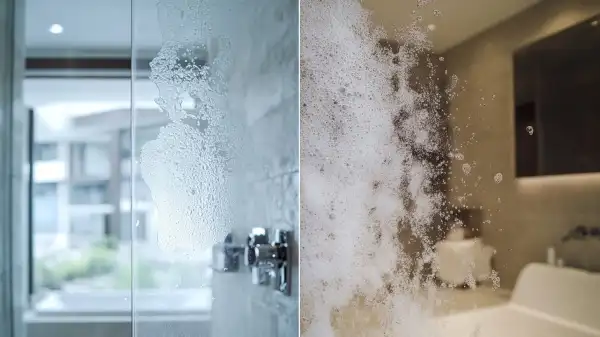
Coastal damp is a moisture problem first and a mineral problem second. Overnight fog leaves glass, tile, and windowsills wet into mid-morning, and damp dust bonds to a surface instead of wiping off it. Add airborne salt within a few blocks of the water and you get hazed shower doors, spotted chrome, and mildew in window returns.
What does the marine layer actually do to a home's surfaces?
It changes how dust behaves. On a dry inland surface, settled dust sits loose and lifts with a cloth. On a surface that has been damp since 2 a.m. and stays damp past 10 a.m., that same dust turns into a grey film that smears when you wipe it.
That is the single most useful thing to understand about coastal cleaning. Residents in Venice 90291 and Ocean Park in Santa Monica often describe it as the house "getting dirty faster," when what has really changed is that ordinary dust is no longer coming off.
The second effect is slower and more damaging. Sustained moisture in shower grout, closet corners, and under wood sills is where mildew starts, and it starts long before anyone can see it.
Why does salt air affect glass and metal more than inland grime?
Because it does not just sit on the surface — it deposits minerals that redeposit every time the surface dries. Salt aerosol reaches homes for blocks inland, and it leaves a haze on shower glass, faucets, hinges, and slider tracks that household spray tends to smear rather than lift.
Metal takes the worst of it. Chrome fixtures, door hardware, and window hinges near the water dull and pit in a way that inland hardware simply doesn't. On glass, the film builds in layers, and each cleaning that only redistributes it makes the next one harder.
The homes we see it worst in are the ones facing open water: Marina del Rey 90292 buildings along the basins and Ocean Avenue units above the Santa Monica bluff.
Which rooms show it first?
Bathrooms, then window returns, then north-facing corners. Bathrooms combine the building's own humidity with coastal damp that never fully clears, so grout, seals, and glass go first.
Window returns are the second tell, particularly in older stock. Venice and Ocean Park bungalows still run painted wood sashes and single-pane glass, and the channel inside the sash holds moisture and grit together — the exact conditions mildew needs.
Damp film, salt haze, or mildew: how do you tell them apart?
They look similar on a bad morning and need completely different treatment. Here is how to identify which one you have.
| Sign | What it looks like | What it responds to |
|---|---|---|
| Damp dust film | Grey haze that smears when wiped dry | A dry pass first, then wet cleaning — not the reverse |
| Salt or mineral haze | Cloudy glass and dulled chrome that returns fast | A descaling pass followed by a dry buff |
| Mildew | Dark speckling in grout, seals, and sash returns | Treatment plus mechanical drying, not just wiping |
| Beach sand | Gritty, abrasive, concentrated at thresholds | HEPA extraction before any mop touches the floor |
| Sunscreen and body oil | Greasy smears on glass and sliders | Degreasing before glass cleaner, or it just spreads |
What order should a coastal clean actually run in?
Order matters more here than in any inland home, because doing the right steps in the wrong sequence undoes them. This is the sequence our coastal crews use.
- Dry pass first. Lift loose dust and grit before introducing any moisture, or you convert dry dust into bonded film.
- HEPA-extract grit at thresholds and edges. Beach sand is abrasive silica, and mopping it just grinds it into hardwood and grout.
- Degrease before glass. Sunscreen and body oil on sliders will smear under glass cleaner otherwise.
- Descale glass and metal as a separate pass. Salt film needs a dedicated product, not a general-purpose spray.
- Dry-buff every descaled surface. This is the step most people skip, and it is why the haze comes back.
- Treat damp zones and move air. Shower corners, closet returns, and sill undersides get dried mechanically, not left to evaporate.
- Do sills and tracks last. Finishing here prevents sealing damp into the one place it does the most harm.
"They really did dig in the corners." — bonita s. wrote on Yelp about a deep clean
Does a coastal home need cleaning more often?
More consistently, rather than dramatically more often. The buildup here is cumulative in a way inland grime isn't: salt film that is only smeared each week gets thicker, and mildew that is wiped but never dried comes back in the same spot.
That is why most coastal households on the Westside pair a deep cleaning reset with Standard & Recurring service rather than relying on either alone. The reset removes what has bonded; the recurring visits keep it from bonding again.
Do dehumidifiers and better ventilation help?
They help with the moisture half of the problem, which is the half that causes lasting damage. Running a bathroom fan well past the end of a shower, and keeping air moving in closets and north-facing corners, meaningfully slows mildew.
Neither does anything about salt. Mineral deposition on glass and hardware is a surface-treatment problem, and it needs a descaling pass regardless of how dry you keep the interior air.
Why do coastal windows streak more than inland ones?
Because you are usually cleaning a mineral film with a product designed for dust. Standard glass cleaner dissolves the surface layer and redistributes the rest, which dries as streaks in exactly the pattern you wiped.
The fix is a descaling pass followed by a dry buff, in that order. It is also why glass on the water-facing side of a Marina del Rey or Venice home needs more attention than the street-facing side of the same building.
How should you plan cleaning for a coastal LA home?
Treat coastal homes as a sequencing problem, not an effort problem. Art's Cleaning Services has cleaned 5,000+ homes since 2021, holds a 4.9 rating across 850+ five-star reviews, and runs the same written room-by-room standard in an Ocean Park duplex as in a Marina del Rey high-rise — including window tracks, switch plates, and the sill edges where damp settles overnight.
Coastal cleaning falls inside our published Los Angeles range of $200–$550+ for most services, with recurring maid service at $120–$300+. Send your details; we reply as soon as possible during business hours with an upfront estimate.
If you host short-term guests on the coast, our guide to same-day Airbnb turnovers in Los Angeles covers how sand and sunscreen change a changeover — and what house cleaning costs in West LA and Santa Monica explains how we price coastal homes.
Get a price for your home
Want this handled instead of scheduled?
Tell us the home size and the service you want. We reply as soon as possible during business hours with an upfront price — no walkthrough required for most homes.
Written by Art
Founder of Art's Cleaning Services, 5,000+ homes cleaned across Orange County since 2021.