
Cleaning Tips · 11 min read
How to Clean a Fireplace: A Step-by-Step Guide for 2026
How to prepare a cold fireplace for cleaning, handle ashes and decide when to call a chimney professional.
How to Clean a Fireplace Safely
The risks associated with learning how to clean a fireplace relate to wood smoke and creosote. Creosote buildup in particular can deteriorate air quality in your home and make your fireplace more susceptible to starting on fire. Regular maintenance reduces these dangers and keeps your fireplace operating efficiently throughout the season. According to the U.S. Environmental Protection Agency, wood smoke contains harmful gases (opens in a new tab) and fine particles that can trigger respiratory issues, while the Chimney Safety Institute of America emphasizes that annual inspections help prevent house fires caused by creosote accumulation. The following guide will demonstrate the steps needed for safe and efficient cleaning.
Before starting, get out your stiff-bristled broom, dustpan, a pair of gloves and a drop cloth in order to protect your flooring from any accidents. Make sure that the fireplace is completely cool before proceeding with this task, and ensure that the damper is open to allow proper ventilation during cleaning.
Before You Begin
A couple of simple steps will keep your home safe and your fireplace in top shape before lighting your first flame or getting ready for the big cleaning. According to the National Fire Protection Association, chimneys, fireplaces, and vents should be checked annually (opens in a new tab), even if you haven’t used them all year. Confirm this check has been made prior to your initial fire or cleaning.
It's time to clean up your masonry fireplace when sooty buildup hits 1/8" or you spot glazy creosote; skip the chemical cleaners, they can't replace a professional's brush and inspection. Never burn wrapping paper, pizza boxes, or foam packaging; these materials spark dangerous flare-ups. If you don't give yourself some breathing room first, you could be caught off guard by unexpected smoke while you're trying to build the first fire of winter. If smoke enters the home, stop using the fireplace and have a chimney professional inspect it before the next fire. Wood smoke releases fine particles tied to asthma, bronchitis, and heart issues, so careful burning and regular maintenance protect your household's health.
Make sure your space is prepared: cover the floor, prepare where to dispose of ashes, then crack the windows open.
Step 1: Prepare Your Fireplace and Workspace
If you want to know how to clean a fireplace, here’s what you should do. First off cover up the hearth and nearby flooring using a drop cloth or old sheeting to catch stray soot and ash. Get rid of things like rugs, firewood, and decorative items from the work area so nothing gets in the way.
Get ready with these items: protective mask and gloves, a metal canister with a cover that will be used to store ashes in, a fireplace shovel or other small scooper, stiff bristles to clean with and a flashlight to look around inside your firebox. Clean only a cold, unused fireplace. Smoke entering a room during use warrants a professional inspection.
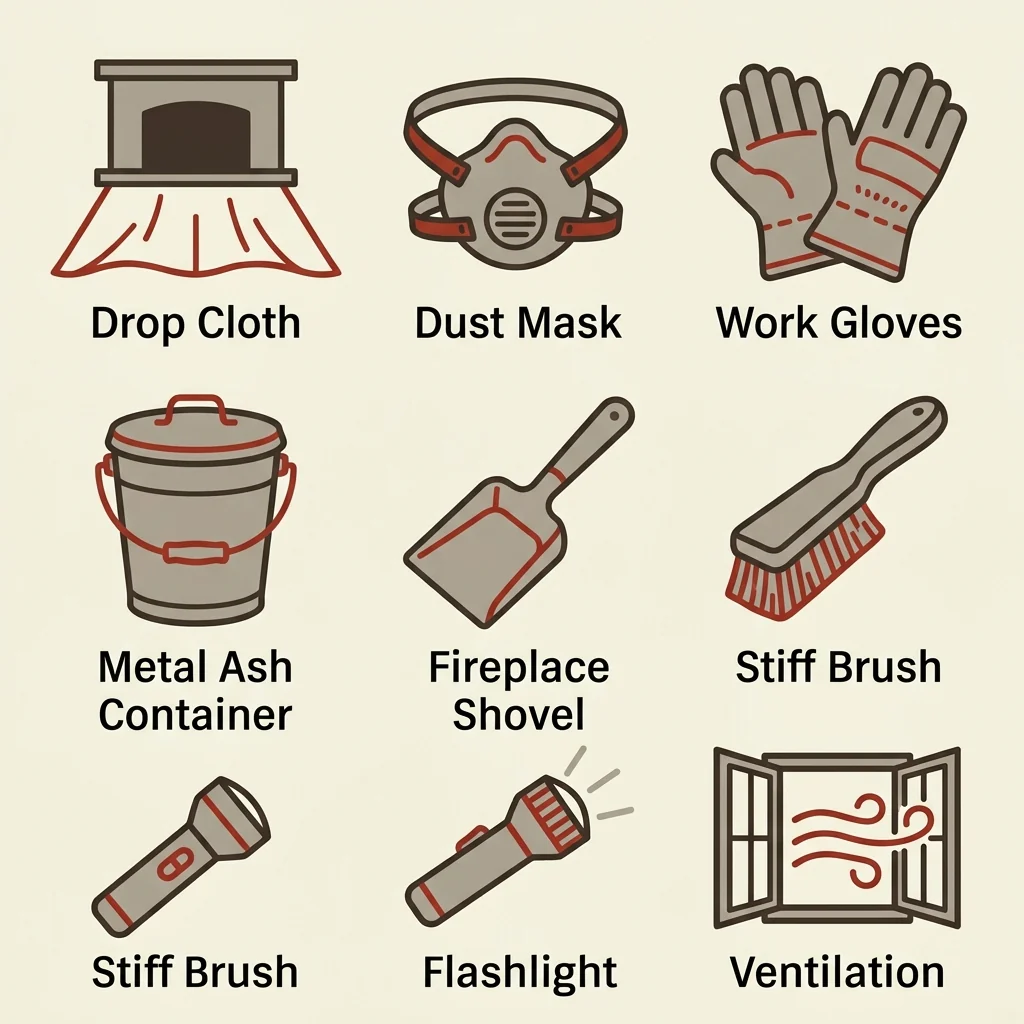
Once your area has been secured and supplies are at hand, you’re ready to scoop out the ashes safely.
Step 2: Remove Ash Safely
Now that we have our work area set up, time for the final task: getting rid of what remains in the ash box. Do wait until your ashes cool all the way down before attempting to remove them… they will still be hot even when your fire seems cold and inactive.
Use a metal shovel and a metal container with a tight-fitting lid; never plastic bags or cardboard, as hot embers can ignite them. Scoop ash gently to avoid stirring up fine dust, and leave a thin layer behind if you plan to use the fireplace again soon. Keep the covered metal container outdoors on a noncombustible surface at least 10 feet from buildings. Follow local disposal instructions once the ash is cold throughout. Part of how to clean a fireplace properly includes careful ash removal to protect both your home’s air quality and the firebox itself.
After removing any excess ashes from the loose debris, continue onto the task of cleaning both the inside surface of your fireplace’s firebox as well as its grate.
Step 3: Clean the Firebox Walls and Grate
Now that the ashes have been cleared out and the firebox is fully cooled, we move on to the inside part. Begin cleaning off the walls using your fireplace brush. Start up at the top and work all the way down until you remove any leftover smoke and creosote stains. Make sure each stroke overlaps into the next as this will help clean thoroughly. Once finished brushing, grab some wet cloths to wipe away any loose soot and dirt.
Carefully lift the grate out of the fire box and set it aside. Brush away excess soot that has built up between the grate's bars and on its top face, then use a clean, wet towel to wipe all the dust away. Place the grate back in the fire box once both the walls and the grate are clean.
Regular maintenance like this reduces the risk of chimney fires caused by built-up residue, as emphasized by the U.S. Environmental Protection Agency’s guidance on safe fireplace operation.
Step 4: Scrub the Hearth Brick or Stone
With the firebox cleaned in Step 3, we turn our attention to the hearth’s brick or stone. Start by laying a drop cloth or old towels along the hearth edge to catch drips and loosened soot before any wet cleaning begins.
Work from the top of the brick or stone downward in small sections so soot residue does not streak over cleaned areas. Use a stiff-bristled brush in circular motions to lift grime without damaging the masonry. Always test your cleaning solution on a small, inconspicuous spot first—masonry finishes and sealants vary widely.
A spotlessly clean fireplace is a satisfying milestone, but it does not replace a professional sweeping and inspection of the chimney system. As advised by the Chimney Safety Institute of America, heavy creosote buildup or glaze requires expert removal beyond what scrubbing can achieve.
Step 5: Clean Fireplace Glass Doors
Wait until the fire is out, all embers are cold, and the glass and firebox have cooled completely.
Open the fully cooled door as directed in the fireplace manual. If it binds, stop and have it serviced.
Use the method and cleaner specified for your model’s cold glass. Have a technician inspect damaged gaskets before the next fire.
If the manual calls for removing glass or doors, follow its reassembly instructions. Have a technician check any loose or damaged hardware.
For fireplace glass, follow the appliance manual. Leave door or gasket removal to a qualified professional unless the manufacturer specifically provides for homeowner removal.
Step 6: Wipe Down the Surround and Mantel
With all the glass doors having been cleaned up, we now turn to the surrounding stone, plus the stone and mantel itself, for any further cleaning. With dust and debris still remaining on them we wish to get those off prior to any wiping because once wet they can smear in any lingering dirt.
Work your way down from the top of the surround as you go, because you don't want drips from later-soaked areas falling back onto the cleaned part of the surround. For sealed stone or tiled surrounds, wash them gently using a mild soap-and-water solution; for painted or wooden surrounds, a slightly moistened microfiber cloth will get things done. Always spot-test cleaners in an inconspicuous area first to ensure surface safety. Remember that this procedure is merely cosmetic; it won't help at all if you have soot build-up more than 1/8 inch thick on the inner flue, or if there is a layer of glazing on the flue lining called creosote. When you've got the outside looking nice, the rest of the job takes place within the firebox: doing any necessary inspections, putting everything back how we found it, and making plans to take good care of the chimney afterwards.
Step 7: Inspect, Close Up, and Plan Ongoing Care
Make sure there isn't any more soot left in your firebox once you have cleaned everything around it and its surrounds; use a flashlight if needed before putting grates and other tools away.
Once the firebox has cooled all the way and you have shut the flue, a proper seal forms to keep out drafts and bugs when you're not using your fireplace. Don't forget to check the flue will open easily before you start a new fire.
Arrange an annual inspection with a qualified chimney professional to identify maintenance needs. Have a qualified chimney professional assess soot deposits or shiny creosote before further use. After 20 minutes of burning, perform a quick smoke check to help you spot drafting problems early.
After reading this article on how to clean a fireplace, make sure you store all necessary tools within easy reach as well as have some nice seasoned hardwood available should the mood strike later in the day.
Fixing Common Fireplace Cleaning Problems
While you have thoroughly followed all steps in a cleaning procedure for your fireplace, stubborn issues can still surface. Often, cloudy glass, stubborn creosote buildup, or smoke drifting back into the room can leave homeowners scratching their heads. Knowing how to clean a fireplace properly solves most of these problems before they escalate.
Cloudy or streaky glass indicates that soot has stuck to its surface. Let the glass and all embers cool completely. Use the glass-cleaning method approved for your fireplace model. Don't use an ammonia cleaner as it may streak glass and does nothing to remove creosote. Follow the appliance manual for the door and gaskets.
Stop using the fireplace and contact a qualified chimney sweep if you see heavy or glazed creosote. If you notice that your glass is showing a shiny, glazed residue on the inside of the glass or if it is feeling thicker to the touch then it’s time to call a certified sweep. Chemical cleaners can’t replace a professional inspection and brushing, and pushing further with DIY methods risks damaging the flue or glass.
Smoke smell or smoke-back might be indicating drafting issues or that there is too much creosote on your flue pipe. Stop using the appliance and have it inspected before lighting another fire. Persistent smoke back or heavy black deposits are red flags—not problems to solve with more aggressive scrubbing.
When in doubt, stop and call a pro. A certified sweep can assess creosote levels, inspect the flue, and ensure safe operation.
Keep Your Fireplace Ready for the Next Fire
Keeping a routine for how to clean a fireplace pays off every winter, ensuring your hearth stays safe and inviting. Schedule an annual inspection for your chimney, fireplace, and vents as required by NFPA 211, even if you rarely use them. Arrange professional sweeping when the inspector recommends it. After lighting your next fire, step outside about 20 minutes later to check that smoke is venting properly. Visible smoke alone cannot confirm a safe draft.
If you have these habits in place, then you can have peace of mind and be ready to enjoy a warm, worry-free fire whenever you choose.
Keep Your Fireplace Clean Year-Round
Now that you know how to clean a fireplace step by step, the habits you build matter just as much as the scrubbing itself. We recommend keeping the smoke check in your routine and watching for that 1/8-inch soot buildup between cleanings. If the surrounding surfaces in your home also need attention, our team at Art's Cleaning Services has been helping homeowners in Irvine, California since 2021. We bring professional products and equipment suited to the confirmed surfaces, and we discuss your preferences before any visit. If something gets missed, simply report it within 24 hours for a free re-clean. You can reach us at the number on our contact page or artscleaningservices@gmail.com to talk through what your home needs. A clean fireplace and a tidy hearth make every fire this season more enjoyable.
Resources
Sources
- Get Essential Wood Stove Smoke Safety Tips (opens in a new tab)
- Learn Annual Chimney Inspection Requirements for Homeowners (opens in a new tab)
- Discover Safe Fireplace Glass Cleaning and Removal Guide (opens in a new tab)
Get a price for your home
Want this handled instead of scheduled?
Tell us the home size and the service you want. We reply as soon as possible during business hours with an upfront price — no walkthrough required for most homes.
Written by Art
Founder of Art's Cleaning Services, 5,000+ homes cleaned across Orange County since 2021.